
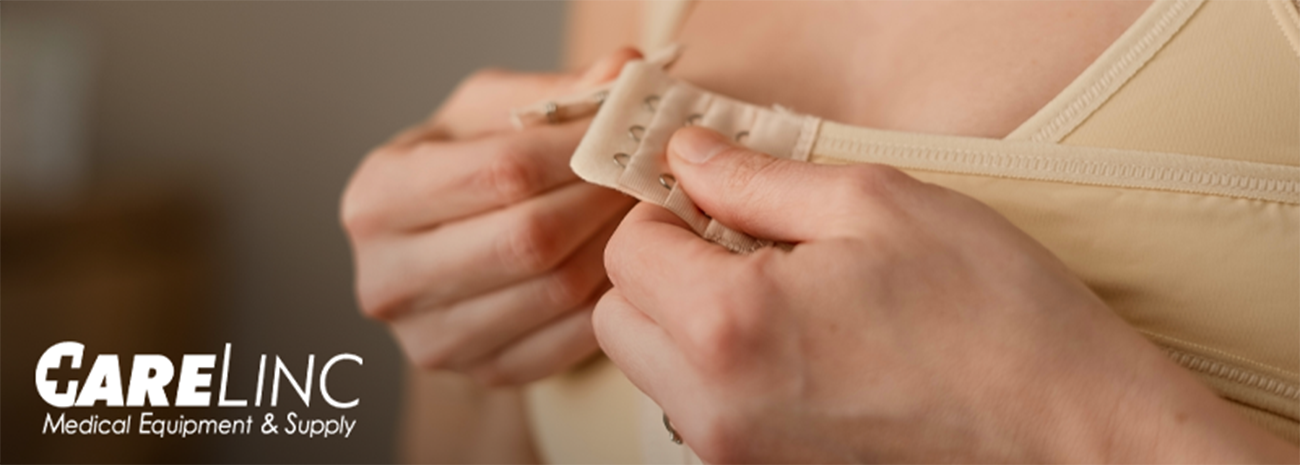
A mastectomy changes more than a treatment plan. It can change how clothing fits, how everyday movements feel, and how you see yourself when you look in the mirror. As recovery begins, many women find themselves managing a mix of physical healing, emotional adjustments, and practical questions about what comes next.
Breast Cancer Awareness Month is an opportunity to talk about those next steps. While every mastectomy recovery journey is different, the right support, education, and breast care products can help you feel more comfortable and confident as you move forward.
At CareLinc, our certified mastectomy fitters work with women at different stages of recovery to help them find breast forms, bras, and other post-surgical products that fit their bodies, lifestyles, and personal preferences.
Quick Navigation
- Why Mastectomy Recovery Looks Different for Every Woman
- What to Expect During the Healing Process
- How a Certified Mastectomy Fitter Can Help
- Preparing for Your First Fitting Appointment
- Finding the Right Breast Prosthesis and Mastectomy Bra
- Practical Ways to Stay Comfortable During Recovery
- When to Contact Your Healthcare Provider
- Moving Forward with Confidence
- Frequently Asked Questions
Why Mastectomy Recovery Looks Different for Every Woman
No two breast cancer experiences are exactly alike. Surgical procedures vary, treatment plans differ, and personal preferences play a major role in recovery decisions.
Some women meet with a mastectomy fitter before surgery to discuss post-surgical products and insurance cover. Others schedule their first appointment after returning home from the hospital or once their surgical site has healed.
Depending on your treatment plan, recovery may also include radiation, chemotherapy, breast reconstruction, lymph node removal, or ongoing monitoring. Each of these factors can affect your comfort, healing timeline, and product needs.
What matters most is finding solutions that support your physical comfort and help you feel like yourself again.
What to Expect During the Healing Process
Healing after a mastectomy takes time. Even when an incision looks healed on the surface, the tissue underneath may still be recovering.
During recovery, you may notice:
- Tenderness or numbness near the surgical site
- Tightness across the chest or underarm
- Changes in posture or balance
- Fatigue during everyday activities
- Reduced shoulder or arm mobility
- Sensitivity to clothing, seams, or bra straps
- Temporary swelling near the chest or underarm
Your recovery timeline may also be affected by other health conditions, additional cancer treatments, and the type of surgery you had. Follow the instructions provided by your surgeon or healthcare team, especially for incision care, activity, stretching, and lifting restrictions.
If radiation therapy is part of your treatment plan, your healthcare team may recommend waiting before selecting a permanent breast prosthesis. Radiation can cause changes in breast tissue and shape, making timing an important part of the fitting process.
The key is not rushing the process. Recovery often progresses in stages, and your needs may change along the way.
How a Certified Mastectomy Fitter Can Help
Many women are surprised by how much guidance a certified mastectomy fitter can provide.
A fitting appointment involves more than just choosing a product from a shelf. It’s a private, personalized conversation about your recovery, comfort, clothing preferences, daily routine, and goals.
At CareLinc, the process begins with getting to know each patient and understanding her unique situation. Depending on timing, a fitter may meet with a patient before surgery, immediately afterward, or several weeks into recovery. Pre-surgical appointments can provide time to review insurance benefits, complete paperwork, and prepare post-operative supplies before surgery occurs.
During the fitting process, your fitter may consider:
- Type and location of your surgery
- Whether you had surgery on one or both breasts
- Current stage of healing
- Planned radiation, chemotherapy, or reconstruction
- Previous surgeries and areas of scar tissue
- Activity level and lifestyle preferences
- Areas of sensitivity or discomfort
- Your preferences for weight, material, shape, and fit
Just as importantly, they take the time to listen.
Questions, concerns, emotions, and uncertainties are all part of the conversation. Every woman's experience is different, and recommendations should reflect her individual needs rather than someone else's recovery story.
Preparing for Your First Fitting Appointment
Many women feel nervous before their first fitting. That is completely understandable.
Knowing what to expect can help make the experience more comfortable.
Typically, much of the paperwork and discussion is completed before any measurements or product evaluations begin. Your fitter will explain each step before proceeding and allow time for questions. Building trust and helping patients feel comfortable is an important part of the process.
During the appointment, your fitter may:
- Review your medical history
- Discuss your surgery and treatment plan
- Take measurements
- Evaluate healing progress
- Talk through available product options
- Answer questions about recovery and daily wear
Many fitters also take baseline arm and hand measurements so they can monitor potential swelling concerns in the future. These measurements can be helpful if symptoms of lymphedema develop later in recovery.
For a permanent breast-form fitting, the surgical area generally needs to be sufficiently healed, with incisions closed, drains or ports removed, and chest-wall swelling reduced. These fittings often occur approximately six to eight weeks after surgery, although your individual timeline may be different.
Your surgeon, healthcare team, and fitter can help you determine when you are ready.
Find a Certified Mastectomy Fitter Near You
Finding the Right Breast Prosthesis and Mastectomy Bra
The breast form and bra that work for one woman may not be comfortable for another. That’s why professional measurements and opportunities to try different options are important.
Breast prostheses, also called breast forms, are available in different:
- Shapes and sizes
- Weights
- Skin tones
- Materials, including silicone and foam
- Designs for full or partial breast surgery
- Styles for daily wear, exercise, swimming, or warmer weather
Some women prefer a weighted silicone breast form that more closely resembles the feel and movement of natural breast tissue. Others may prefer a lightweight form because of sensitivity, chest discomfort, breathing concerns, activity level, or personal preference.
Mastectomy bras are designed with features that differ from traditional bras, including:
- Built-in pockets that help hold a prosthesis securely
- Wider straps for support
- Softer materials near sensitive areas
- Designs that promote comfort throughout the day
A well-fitted breast form and bra can help create a more balanced appearance under clothing. The right combination may also help you feel more comfortable during everyday activities.
Your fit can change as swelling decreases, scar tissue develops, your weight changes, or you continue treatment. If a breast form or bra begins to shift, rub, pull, or feel uncomfortable, contact your fitter rather than assuming you need to live with the discomfort.
Related Reading: How to Get Mastectomy Bras & Prostheses Covered by Insurance | CareLinc
Tips for Staying Comfortable During Recovery
Small adjustments often make a meaningful difference during recovery.
Choose Clothing That Works With Your Recovery
Soft fabrics, front-closure garments, and loose-fitting tops can make dressing easier when your chest or arm movement is limited. Avoid seams, straps, or tight bands that rub against sensitive areas.
Follow Your Care Team’s Movement Instructions
Your surgeon or physical therapist may recommend gentle arm and shoulder exercises as you recover. Follow their instructions and ask before starting new stretches or returning to strenuous activity.
Keep Track of New Symptoms
Pay attention to changes such as swelling, redness, warmth, drainage, increasing pain, or reduced arm mobility. Contacting your healthcare team early can help them determine whether the change is part of normal healing or needs further evaluation.
Give Yourself Time to Adjust
Wearing a new breast form or mastectomy bra may feel unfamiliar at first. Your fitter can explain how long to wear a product initially and how to adjust its position. If something pinches, shifts, or causes pressure, ask for help with the fit.
Accept Support When You Need It
Family members, friends, support groups, therapists, and healthcare professionals can all play valuable roles during recovery. Having a support system often makes it easier to navigate both the physical and emotional aspects of healing.
When to Contact Your Healthcare Provider
A mastectomy fitting should never take place when healing complications are present.
If you notice symptoms such as:
- Open wounds
- Remaining surgical drains
- Active sutures
- New swelling
- Unusual redness
- Warm areas near the surgical site
- Persistent pain
Contact your healthcare provider promptly. These signs may indicate infection, fluid buildup, lymphedema, or other complications that require medical attention. Mastectomy fitters can help identify concerns, but diagnosis and treatment decisions should always come from your medical team.
Moving Forward with Confidence
Recovery after a mastectomy is rarely a straight line. There may be milestones that feel encouraging and days that feel frustrating. Both are normal parts of the process.
Finding comfort often comes through a series of small steps like healing, learning what works for your body, gaining confidence with new routines, and having access to knowledgeable professionals when questions arise.
At CareLinc, our mastectomy fitters are committed to helping women navigate those steps with compassion, education, and personalized support. Whether you're preparing for surgery or looking for breast care products after treatment, we're here to help you find solutions that fit your needs today and adapt with you in the future.
To learn more about mastectomy fitting services and breast care products, contact your local CareLinc team or visit one of our locations to schedule an appointment.
Frequently Asked Questions
When should I schedule a mastectomy fitting?
Some women meet with a fitter before surgery, while others schedule an appointment after returning home from the hospital or later in recovery. The right timing depends on your treatment plan, healing progress, and your healthcare provider's recommendations.
Can I be fitted for a prosthesis immediately after surgery?
Not always. Fittings are generally delayed if there are open wounds, drains, sutures, signs of infection, or other healing concerns. Your fitter can help determine when you're ready for a fitting.
What happens during a mastectomy fitting appointment?
Your fitter will discuss your medical history, surgery, and recovery goals, take measurements, evaluate healing progress, and help you explore prosthesis and mastectomy bra options that fit your needs and lifestyle.
Will insurance cover a breast prosthesis and mastectomy bras?
Many insurance plans provide coverage for breast prostheses and mastectomy bras. CareLinc can help verify benefits and explain coverage requirements before products are ordered.
How do I know if a prosthesis is the right choice for me?
A fitter can help you explore whether a breast form feels right for you. After a single mastectomy, a properly weighted form and supportive bra can help restore a sense of balance. Your fitter will consider your healing, comfort, and personal goals.
What should I do if I notice swelling or discomfort after recovery?
Contact your healthcare provider if you experience new swelling, redness, warmth, pain, or other concerning symptoms. Your fitter may also recommend speaking with your physician about evaluation for lymphedema if swelling develops.
October 1, 2026 by CareLinc Medical Equipment & Supply