
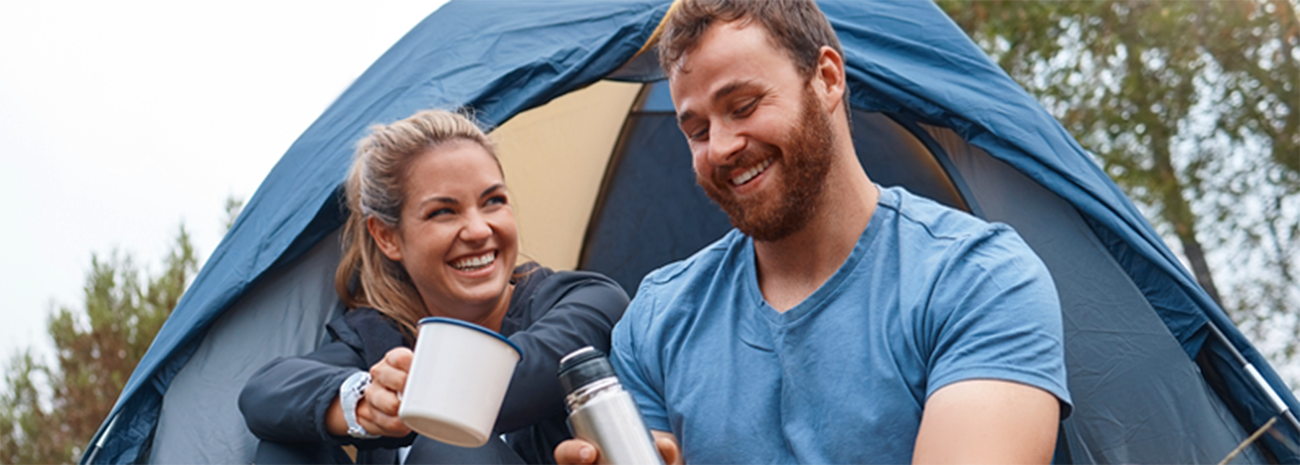
There’s a certain appeal to unplugging for a few days. No email alerts. No constant noise. No rigid schedule. Camping, RV trips, and off‑grid travel offer a reset that many people look forward to each summer. If you use CPAP therapy, though, that sense of freedom can come with a familiar question:
How do I keep my therapy going when there’s no outlet nearby?
It might seem impossible at first, but camping with CPAP is actually more manageable than you might expect. With the right planning, the right power setup, and equipment built for travel, CPAP therapy can keep going even when you’ve left the power grid behind. Many CareLinc patients successfully use CPAP while tent camping, staying in remote cabins, or traveling cross‑country without reliable electricity.
This guide walks through practical, real‑world considerations for maintaining CPAP therapy while camping or traveling off the grid: what to plan for, what to pack, and how portable options like the ResMed AirMini Portable CPAP Machine can make remote travel considerably easier.
Why Staying Consistent with CPAP Matters — Even on Vacation
It can be tempting to view a short trip as a “break” from therapy. After all, a night or two without CPAP may not feel like a big disruption. But for many people, even a brief lapse in their therapy can quickly lead to fragmented sleep, daytime fatigue, headaches, or a return of snoring and breathing interruptions.
Consistency matters because:
- Sleep apnea events tend to return immediately when therapy stops
- Poor sleep often undermines the rest and recovery people hope for on vacation
- Fatigue can affect hiking safety, driving alertness, and overall enjoyment
Travel doesn’t change how your airway behaves at night. It shouldn’t change your therapy routine, either. With the right preparation and planning, your therapy can continue with minimal disruption.
Common Off‑Grid CPAP Challenges (and Why They’re Solvable)
Off‑grid CPAP use does come with a few significant obstacles — luckily, they’re all predictable. Here’s some key factors to keep in mind:
1.Limited or No Power
Standard CPAP machines are designed for a bedside outlet, not a forest campsite. Without planning, power becomes the biggest barrier.
2.Bulky Equipment
Full‑size CPAP setups take space and aren’t designed for backpacks, small tents, or limited RV storage.
3.Humidification and Water Access
Traditional heated humidifiers require distilled water and steady power, both of which can be difficult to find when you’re off the grid.
4.Environmental Conditions
Dirt, temperature shifts, and humidity can affect any medical device if it’s not designed for travel.
These challenges are exactly why portable CPAP machines and dedicated power solutions exist.
Choosing the Right CPAP Setup for Off‑Grid Travel
If remote travel is something you do regularly, or are planning to do more often, a travel‑friendly setup matters as much as the destination itself — maybe even more.
Why Portable CPAP Machines Are Different
Portable CPAP machines are engineered specifically to address many travel-related concerns. Their features include:
- Smaller footprint
- Lower power draw
- Fewer fragile components
- Portable, durable overall design
CareLinc helps patients prepare for off-grid CPAP use by offering solutions like the ResMed AirMini Portable CPAP Machine, which combines effective therapy with a compact, lightweight design that simplifies packing and power management.
Spotlight: ResMed AirMini for Camping and Remote Travel
The ResMed AirMini is one of the most widely used portable CPAP options among travelers, including those heading off the grid. Its design, power usage, and customization options set it apart.
Size and Portability
The AirMini is significantly smaller than traditional CPAP machines. It fits easily into a backpack, duffel, or RV storage compartment without competing with food, clothing, or gear.
Waterless Humidification
One of the biggest advantages for camping is that the AirMini uses waterless humidification. Instead of a heated water chamber, it relies on a heat‑and‑moisture exchange system that captures humidity from your own breath.
For off‑grid travel, this means:
- No distilled water to pack
- No water spills in transit
- Fewer nightly setup steps
Power Efficiency
Portable CPAP machines are designed to use less power than standard units. When paired with an appropriate battery, the AirMini can support multiple nights of therapy, depending on settings and battery capacity.
Mask Compatibility
The AirMini works with several different ResMed masks, allowing users to stay with a familiar fit rather than starting from scratch before a trip.
Powering Your CPAP Off the Grid
Power planning is the most important part of off‑grid CPAP use. It’s also the part people underestimate most often.
Battery Power Basics
For camping and remote travel, CPAP power typically comes from:
- Dedicated CPAP battery packs
- Portable power stations
- RV battery systems
The key is matching the battery to your machine’s power needs and your expected trip length.
How Many Nights Can You Expect?
The battery run time of your device is going to depend on several key factors:
- CPAP pressure settings
- Whether humidification is used
- Battery capacity
- Ambient temperature
Because the AirMini does not use a heated humidifier, it tends to be more battery‑friendly than traditional machines under similar conditions.
Backup Power Matters
Unexpected weather, longer trips, or charging delays frequently happen even under the best of circumstances. You can be ready for anything by taking a few small precautions:
- Bring a second battery
- Use a solar charger for daytime recharging
- Plan a conservative power buffer
Running out of CPAP power in the middle of a remote trip can turn a relaxing night into a restless one.
Packing Your CPAP for the Outdoors
When traveling off the grid, thoughtful packing protects your equipment and simplifies nightly setup.
Protect Against Dust and Moisture
Even in fair weather, campsites introduce dirt and humidity. Store your CPAP:
- Inside a sealed travel bag
- Off the tent floor when possible
- Away from cooking areas and campfires
Temperature Awareness
CPAP machines handle a range of temperatures, but extreme heat or cold should be avoided. Store batteries in insulated containers if temperatures drop overnight.
Keep Supplies Minimal but Complete
Bring:
- Extra filters
- Mask wipes or cleaning cloths
- An extension cord or DC adapter if applicable
Off‑grid travel isn’t the place to discover you forgot a small, but essential, part.
Sleeping Comfortably with CPAP in a Tent or Cabin
Using CPAP outdoors may feel unusual at first, but a few small adjustments can make it feel just as routine as home.
Tent Setup Tips
Position your CPAP:
- On a stable surface, not loose fabric
- Away from door openings
- Where tubing won’t be crushed or kinked
Some campers use small foldable tables or gear bins for stable placement.
Noise Considerations
Portable CPAP machines like the AirMini are designed to stay quiet. In a tent or cabin, airflow noise may sound slightly different, but for most users and their fellow campers, it doesn’t disrupt sleep.
Cleaning CPAP Equipment While Camping
You don’t need a full bathroom sink to maintain basic hygiene.
Daily Care
- Wipe mask cushions with CPAP wipes
- Let tubing air‑dry during the day, if possible
After the Trip
Once home, return to your normal cleaning routine. A few days in the outdoors doesn’t require deep cleaning — if basic care is handled along the way.
When to Plan Ahead with CareLinc
Before heading off the grid, it’s worth checking in about your setup, especially if this is going to be your first time heading off the grid with a CPAP.
CareLinc can help with:
- Portable CPAP options like the ResMed AirMini
- Travel‑friendly masks and accessories
- Power considerations and compatibility
- Replacing worn supplies before your trip
Planning ahead gives you time to test your setup at home instead of troubleshooting in the middle of nowhere.
Enjoy the Trip Without Compromising Your Sleep
Camping and off‑grid travel are about being present, rested, and able to fully enjoy the experience. CPAP therapy doesn’t have to be a barrier to that goal. With the right equipment and preparation, many people find that their sleep on camping trips is more consistent, not less.
If you’re considering a portable CPAP solution for upcoming travel, the ResMed AirMini Portable CPAP Machine is a practical, compact option designed specifically for life beyond the bedroom outlet. CareLinc’s team can help you decide whether it’s a good fit for your needs and walk through setup before your next trip.
Frequently Asked Questions
Can I use my regular CPAP machine while camping?
It’s possible, but standard CPAP machines typically take up significant space, require more power and use heated humidifiers, which makes them less practical for off‑grid travel compared to portable options.
Do I need humidification when using CPAP outdoors?
Some users are comfortable without heated humidification. Devices like the ResMed AirMini use waterless humidification, which many people find sufficient during travel.
How many nights can a CPAP battery last?
Battery life varies based on pressure settings, machine type, and battery capacity. Many batteries provide multiple nights of use with portable CPAP machines.
Is CPAP safe to use in a tent?
Yes, if the device is kept dry, stable, and protected from dust and temperature extremes.
Should I test my setup before traveling?
Absolutely. Running your CPAP and battery at home for a few nights helps confirm everything works as expected before you rely on it remotely.
June 1, 2026 by CareLinc Medical Equipment & Supply